
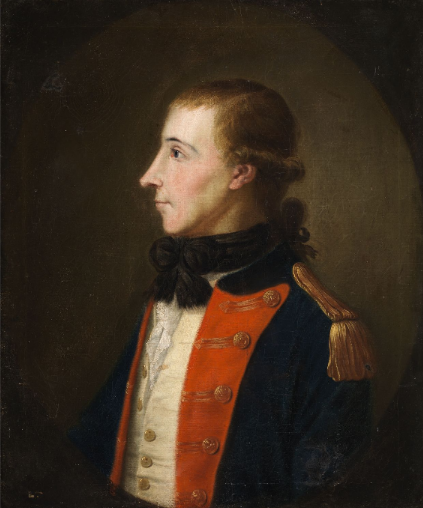
Theobald Wolfe Tone (1763-1798) stands as the founder of Irish Republicanism and the father of the modern Irish nation. A Protestant of Dublin, he rose above the divisions England imposed on Ireland and proclaimed the unity of “Catholic, Protestant and Dissenter” as the basis of national freedom. As a leading force behind the Society of United Irishmen, he sought not reform, but the complete overthrow of foreign rule and the establishment of an independent Irish Republic. In exile, he laboured tirelessly to secure French aid for Ireland’s liberation, culminating in the campaigns of 1796 and 1798. Captured after the rising of ’98, he faced his enemies with defiance and chose to end his own life in captivity rather than submit to the Crown’s hangman. In his life and writings, Tone gave Ireland a doctrine of national liberation that has endured ever since.
Writings of Theobald Wolfe Tone
Collected Writings of Wolfe Tone by cartlann.org
Political Writings and Statements
Proposal for a British Military Colony in Hawaii (10th & 23rd August 1788)
Renewed Sandwich Islands Proposal: Correspondence and Commentary (Letters dated September-December 1790)
The Spanish War (1790)
Essay On the State of Ireland in 1720 (1790)
Essay On the State of Ireland in 1790 (1790)
On the English Connection (1790)
On the Necessity of Domestic Union (1790)
An Argument on Behalf of the Catholics of Ireland (1st August 1791)
Letter To Faulkner’s Journal, July 11th, 1793 (11th July 1793)
Statements On Behalf of the Catholics (20th August 1793)
Reasons Why the Question of Parliamentary Reform Has Always Failed (1793)
Memorials To the French Government (February 1796)
Address To the People of Ireland (c. 1796)
Wolfe Tone’s Speech from the Dock (10th November 1798)
Letter To the Executive Directory of the French Republic (10th November 1798)
Personal Writings
Wolfe Tone’s Final Letters to His Wife (10th & 11th November 1798)
Memoirs of Theobald Wolfe Tone (1796-1798)